What is Revenue Operations (RevOps)?
Your business is growing, and you might be finding that expansion has brought some new issues to the forefront. Whether it's departmental rifts, too many tech platforms among teams, or scattered goals across your business, it can be difficult to know where to start dealing with these problems.
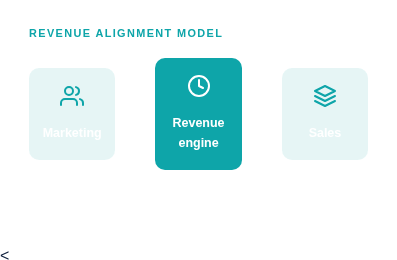
Revenue Operations (RevOps) is a business function that unifies marketing operations, sales operations, and customer success operations under a single team to optimize the entire customer lifecycle and drive predictable revenue growth. RevOps eliminates silos between revenue-generating departments by aligning strategy, processes, technology, and data.
Translation? RevOps is what happens when you finally get tired of watching deals die in the handoff between marketing and sales, listening to departments blame each other for missed targets, and explaining to your board why the forecast was off by 30% again.
It's the operational backbone that makes your marketing, sales, and customer success teams actually work together instead of operating like three competing startups that happen to share office space.
Why Revenue Operations Exists
Here's the uncomfortable reality most B2B companies live with:
Marketing celebrates hitting their MQL target while sales groans because 60% of those "qualified" leads are complete garbage. Sales closes a deal by promising features that don't exist yet. Customer success discovers this three weeks into onboarding when the customer asks for those imaginary features. Nobody knows which marketing campaigns actually drive revenue because the attribution is a dumpster fire. And your forecast? Let's just say it's more "creative writing" than financial planning.
Sound familiar? That's not a people problem; it's a structural problem.
Companies organized with separate marketing ops, sales ops, and customer success ops inevitably create gaps, conflicts, and inefficiencies. Each team optimizes for its own metrics without caring what happens before or after its piece of the customer journey. The result? Revenue leaks from a thousand tiny disconnects.
RevOps fixes this by saying "enough with the nonsense" and aligning everyone around the one thing that actually matters: revenue.
What a RevOps Team Actually Does
Technology stack management: Deciding which CRM to use and getting it implemented properly, connecting your marketing automation platform so data flows correctly, and making sure integrations don't break.
Data governance: Establishing rules for what makes a "qualified lead," cleaning up duplicate contact records, and making sure data is consistent across systems.
Process design: Creating lead routing rules, documenting handoff procedures, and building workflows that prevent deals from sitting untouched.
Reporting and analytics: Building dashboards everyone can agree on, creating attribution models that show which marketing drives revenue, and developing forecasting methodologies.
Enablement: Training teams on new processes, creating documentation people might actually read, and driving adoption of new tools.
Strategic planning: Designing sales territories, setting quotas, and planning capacity so you don't run out of resources.
Why Your Business Needs Revenue Operations
Simply put—you need RevOps if you want to align your departments and maximize your revenue potential. But let's dig deeper into why RevOps has become essential for growing B2B companies in 2026.
The Business Case for RevOps
Revenue Growth Acceleration
Companies with mature RevOps functions grow revenue 10-20% faster than competitors with siloed operations, according to Boston Consulting Group research. This isn't marginal improvement—it's a competitive advantage.
Improved Forecast Accuracy: RevOps-driven organizations achieve 90%+ forecast accuracy compared to the 60-70% that most companies struggle with. Better forecasting means smarter resource allocation, more accurate revenue recognition, and fewer panic-driven strategy pivots.
Reduced Customer Acquisition Cost: By eliminating redundant tools, automating manual workflows, and improving lead quality, RevOps typically reduces CAC by 20-40%. Your marketing and sales dollars work harder when they're coordinated.
Increased Customer Lifetime Value: When marketing, sales, and customer success coordinate their efforts instead of competing, retention rates increase by 20-30%. Coordinated engagement drives loyalty and expansion.
Faster Sales Cycles: RevOps implementations reduce sales cycles by 15-20% on average by improving lead quality, streamlining handoffs, and eliminating bottlenecks. Your reps spend less time hunting for information and more time closing deals.
Better Team Efficiency: Revenue teams operating under RevOps frameworks report 25-35% improvements in productivity by reducing duplicate work, accessing better data, and following optimized processes.
The Market Forces Making RevOps Essential
Buyer Expectations Have Evolved: Your prospects research you before talking to sales, compare you against competitors in real-time, and expect personalized experiences across every touchpoint. A disjointed buyer journey destroys conversion rates.
Data Complexity is Overwhelming: The average B2B company now uses 110+ SaaS applications. Without RevOps orchestration, that creates data silos, integration nightmares, and teams working off different versions of truth.
Economic Pressure Demands Efficiency: When growth slows or budgets tighten, you can't just throw more people at problems. RevOps extracts more value from existing resources and improves productivity without expanding headcount.
Remote Work Requires Better Operations: Distributed teams can't coordinate through hallway conversations. You need robust processes, integrated systems, and clear frameworks—exactly what RevOps provides.
Signs You Need Revenue Operations
Of course, there are specific pain points that organizations experience that can be solved through Revenue Operations. Below are some common issues organizations face that are solid indicators they need a RevOps strategy:
Critical Warning Signs
If your sales team is still tracking prospects in spreadsheets, you're bleeding opportunities. Manual data entry leads to errors, duplicates, and deals falling through cracks. There's no visibility into pipeline health, no forecasting accuracy, and your team wastes hours on administrative work instead of selling.
That hot lead who requested a demo at 2pm on Tuesday? They're still waiting for a follow-up on Friday because the lead routing rules broke and nobody noticed. Or the lead went to a rep who's on vacation. Or it got assigned, but there's no accountability for response time. When 40% of your marketing leads never get contacted, you have a structural problem, not a people problem.
Marketing measures success by MQLs generated. Sales measures success by deals closed. Nobody agrees on what makes a qualified lead. Marketing thinks sales is lazy and doesn't follow up. Sales thinks marketing sends garbage leads. Every meeting devolves into finger-pointing. Sound familiar?
You have 50,000 contacts in your CRM, but you can't segment them effectively for targeted campaigns. You don't know which contacts are engaged vs. dormant. You can't identify accounts showing buying signals. Your database is an untapped asset because you lack the processes and tools to activate it.
You're spending $50K/month on marketing, but you can't definitively say which channels drive revenue. You can track form submissions and downloads, but the path from content to closed deal is murky. Attribution is broken, so budget decisions are based on gut feel instead of ROI data.
Your marketing team sends the same email blast to everyone. There's no personalization, no segmentation, no lifecycle-based nurturing. Leads get generic content that doesn't match their stage or interests. You're leaving engagement and conversion on the table.
%20(1).webp?width=900&height=900&name=flawless-inbound-revops-flywheel-line(no%20hands)%20(1).webp)